


Memes Are Just Compressed Communication
Before memes became 'content strategy,' they were just survival.

A reaction image sent to your friend at 1:13 AM.
A blurry SpongeBob screenshot that somehow explained your entire emotional state.
A Minion meme your aunt posted that made everyone collectively uncomfortable.
Memes move faster than almost any other form of communication because they compress emotion, timing, culture, and shared experiences into something your brain understands almost instantly.
One image.
One phrase.
Immediate understanding.
That's not accidental. That's internet fluency.
Memes as Cultural Fluency
Memes are more than jokes. They are a form of cultural fluency — a shorthand that signals belonging to a group. When you understand a meme, you're not just laughing. You're recognizing shared knowledge, shared timing, and shared experience.
When you understand a meme, you're not just laughing — you're proving you were there.
In-group language
Memes rely on references only certain people get. Whether it's a TV show, a viral moment, or a genuinely unhinged niche hobby, memes create community. The 'Distracted Boyfriend' meme conveys an entire relationship dynamic without a single word of explanation. That's compression. That's fluency.
Timing
Memes thrive on relevance. A meme about something people are already thinking about spreads fast because it doesn't ask for effort — it just confirms what everyone already feels. Miss the window by even 48 hours, and the same meme that would've gotten 400 shares gets three likes and a concerned DM from your coworker.

Relevance
Memes connect to current feelings or frustrations. The 'This Is Fine' dog sitting in a burning room captures a mood without explaining the mood. It doesn't need to. Anyone who's tried to hit an enrollment deadline while the website is down, the financial aid office is on hold, and your director just asked for 'one small change' knows exactly what that dog is feeling.

Why Brands Struggle Here
Brands often try to join the meme conversation and end up sounding like a substitute teacher who just discovered slang. The problem isn't that they're uncool. The problem is structural.
Forced tone
When a brand tries too hard to be funny, it shows. Memes need to feel like a genuine reaction, not a line item in a content calendar. The second a meme smells like it went through Legal, it's dead on arrival.
Approval layers

Corporate teams stack approvals on top of approvals until the spontaneity is completely gone. By the time a meme clears the fifth stakeholder, the trend it was referencing has already become a nostalgia piece.
Missed moments
Memes are about catching the wave. Brands often jump in too late, too polished, or with a reference so outdated it loops back around to being cringe. There is no worse marketing content than a brand using a meme that was peak two years ago with a caption that says 'We had to.'. No. You didn't. And we wish you hadn't.
Humor Builds Trust Faster
Humor is a shortcut to connection. It breaks down barriers and signals something important: that you understand the room.
Relatability
When a meme captures a shared experience, it says 'I get you' faster than any brand manifesto ever could. That builds trust not through persuasion but through recognition. You're not selling. You're nodding along.
You're not selling. You're nodding along.
Self-awareness
The best memes often poke fun at themselves or the culture they come from. That honesty feels refreshing because it's rare. A brand that can laugh at the thing they're doing while doing it is a brand that feels like a person. And people trust people.

It’s Not About Being Funny
Memes are not just about laughs. They're about understanding people deeply enough to speak their language in a flash.
The power of a meme is compression. Emotion, timing, shared history, cultural context — all collapsed into one image and one phrase. No loading time. No explanation required. Just: instant recognition.
Brands and creators who grasp this don't chase trends. They understand why the trends work in the first place. And when you understand the why, you don't need to be the funniest person in the room.
You just need to be fluent.
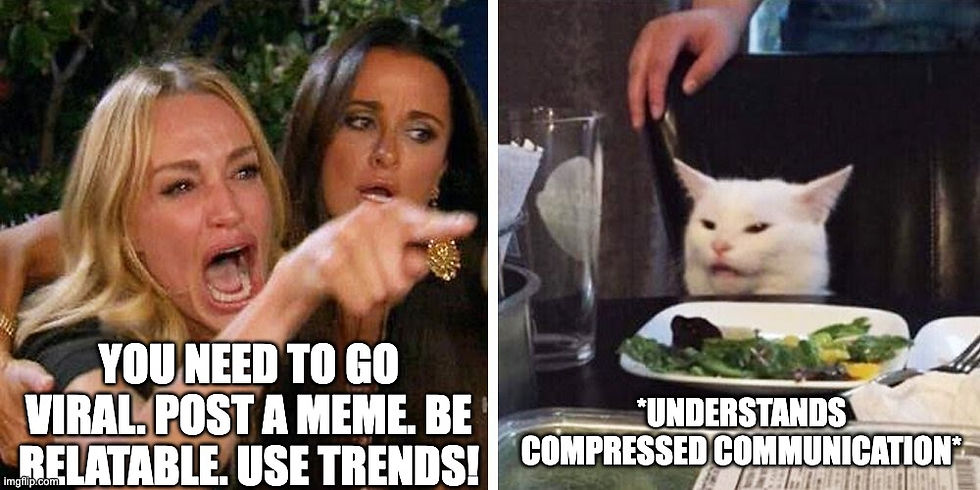
Why Memes Feel More Human Than Brands
People don’t share memes because they’re polished.
They share them because they feel honest.
Memes acknowledge frustration, awkwardness, burnout, confusion, anxiety, nostalgia—all the weird little human experiences traditional marketing tries too hard to smooth out.
That’s why a blurry screenshot with Impact font often feels more authentic than a million-dollar campaign.


Comments